

National Preparedness Month: Preparing Your Team for Potential Natural Disasters
August 15, 2026September 26, 2026
As natural disasters become more frequent and severe, organizations must prepare for hazards that can threaten employees, homes, workplaces, and entire communities. Tornadoes are particularly dangerous because they can develop quickly, leaving people with only minutes to reach safety.
Understanding tornado preparedness can help team members recognize risks, respond to warnings, and make safer decisions under pressure. In this article, we examine how tornadoes affect communities, offer tornado safety tips for employees, and explain how relief funds can support recovery after a disaster.
The Impact of Tornadoes on Communities
Tornadoes are violently rotating columns of air that can produce winds exceeding 200 mph, destroy buildings, overturn vehicles, and propel dangerous debris.
The United States experiences approximately 1,200 tornadoes annually. Although tornadoes can occur anywhere, risks are especially high in Tornado Alley and Dixie Alley. Research suggests that tornado activity has shifted eastward toward the Midwest and Southeast, exposing more communities to these storms.
Beyond destroying property, tornadoes can cause injuries, displace families, disrupt businesses and utilities, and create lasting financial and emotional hardship.
Recent Tornado Seasons: 2024 and 2025
The United States experienced an exceptionally active tornado season in 2024. According to the Insurance Information Institute, 1,811 tornadoes occurred nationwide, resulting in 54 deaths.
Tornado activity remained elevated in 2025. Preliminary estimates identified 1,559 tornadoes and 67 related deaths. Several costly severe convective storm outbreaks occurred during the spring, including major events from March 14-16 and May 14-16. These storms affected numerous states across the Midwest, South, and East.
These back-to-back active seasons show why employers should treat tornado planning as an ongoing responsibility, not a concern limited to traditionally high-risk states. Clear emergency procedures, accessible shelters, reliable warning systems, and post-disaster financial support can help protect team members when every minute matters.
The Role of Relief Funds in Tornado Recovery
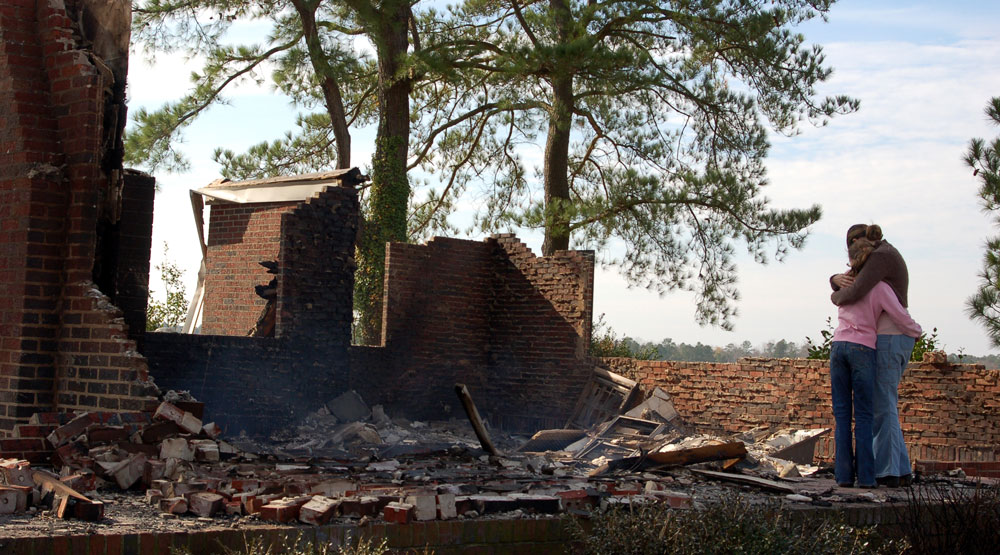
Recovering from a tornado can take months or even years. In a matter of minutes, a tornado can destroy homes, businesses, vehicles, and critical infrastructure, leaving survivors without shelter, transportation, or necessities. Employee relief funds can provide timely financial support when team members need it most.
Establishing a relief fund before disaster strikes enables an organization to respond quickly and effectively. Depending on the fund's individual grant criteria, assistance may help employees pay for temporary housing, food, clothing, medical care, transportation, home repairs, and other essential recovery expenses.
Tornadoes can strike quickly, but thoughtful preparation can help organizations respond with compassion and purpose. A well-managed employee relief fund gives affected team members a dependable source of support as they address urgent needs and begin rebuilding their lives.
How Establishing a Relief Fund With EAF Can Help Your Organization Support Employees in Need
If you want to help protect your team members but aren’t sure how to launch an employee relief fund, EAF can help.
Severe weather, natural disasters, and personal hardships can leave employees facing unexpected expenses and difficult decisions. A relief fund allows your organization to provide timely financial assistance so affected team members can address urgent needs and focus on recovery. It can also strengthen workplace morale by allowing employees to support colleagues experiencing hardship.
As a financial first responder, Emergency Assistance Fund (EAF) helps organizations build and administer relief funds that deliver assistance efficiently. Grants can help eligible individuals manage the financial effects of disasters and other hardships as they begin rebuilding their lives.
Learn more about how an employee relief fund works, or contact EAF to begin establishing a fund for your organization.

Tornado Safety Tips to Share with Team Members
Sharing safety tips for tornadoes is important in all areas where tornadoes occur, but it is especially crucial if you are in or near Tornado/Dixie Alley since the likelihood of a tornado forming is higher. It’s difficult to know when and where a tornado will form, so understanding when to take action and what to do are crucial parts of how to survive a tornado.
Here are some of the most important tornado safety tips to share with your team members to ensure they stay safe in the event of a tornado:
- Before
-
- Understand the risk of tornadoes in your area, especially in the Midwest and Southeast where they are most common
- Know the signs of a tornado, like rotating, funnel-shaped clouds, a loud roar, approaching clouds of debris, the color of the sky changing, and a strange quiet during or after a thunderstorm
- Pay attention to weather reports in your area so you know when conditions may cause a tornado to form
- Make a plan for taking shelter if a tornado does form in your area, including:
- Identifying safe places to take shelter, which should have no windows, like a basement or stairwell
- Creating an emergency tornado safety kit with bottled water, non-perishable food, blankets, medical supplies, medication, a flashlight, a radio, batteries, and more
- During
-
- Immediately seek shelter in the place you’ve previously identified as safe
- Cover your head and neck with your arms in order to protect yourself. You should also put clothing and furniture around or on top of you to shield yourself more
- Pay attention to alerting systems for emergency information and updates
- If you are outside or in a vehicle, don’t try to outrun a tornado. If you can’t get to a building, find a ravine or ditch, use your arms to cover your head and neck, and put any clothing or padding on top of you
- After
-
- Pay attention to local authorities and alerting systems for updates
- Stay clear of fallen power lines or broken utility lines
- Seek medical attention immediately if you are sick or injured
- Be careful during clean-up and wear the appropriate gear, like pants, gloves, thick-soled shoes or boots, and even face masks when necessary, as mold and other debris may be dangerous
Understanding these safety precautions for tornadoes can be the difference between life and death, which is why it is vital to share this information with team members so they know how to keep themselves and their families safe. There’s no way to avoid tornadoes, so it’s important to be prepared and know how to respond. That includes helping those who have been impacted by tornadoes to rebuild their lives. Establishing a relief fund ahead of time is one of the best ways to provide immediate assistance for team members impacted by tornadoes.